Aarhus University Seal

Research

Three interdisciplinary work packages integrate clinical, biomedical, and natural sciences to uncover disease mechanisms and improve care for patients with multiorgan inflammatory diseases centered on the skin.
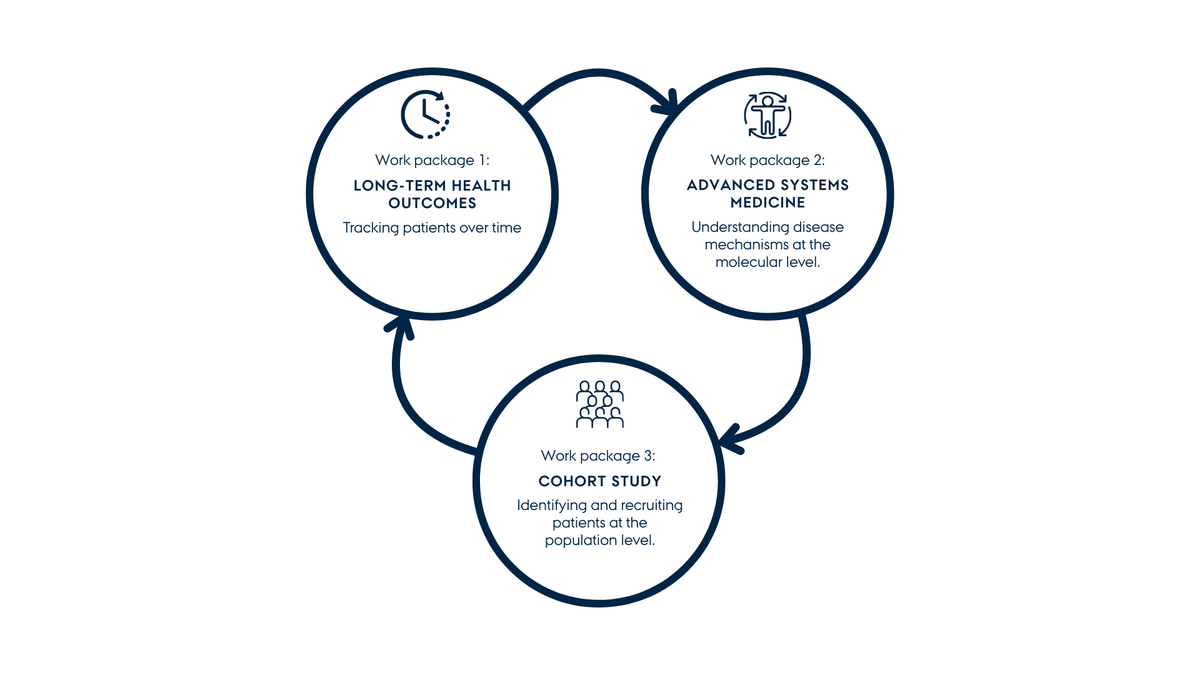
How the work packages connect

Think of the 3 work packages as parts of a single research ecosystem, each with a different role, but all feeding into each other to create a complete picture of multiorgan inflammatory diseases.

  • Data flow
    WP3 identifies patients and collects baseline clinical data → WP1 follows these patients over time → WP2 uses patient samples and data for advanced molecular analyses.
  • Knowledge sharing
    WP1 provides long-term outcome data that helps WP2 refine predictive models. WP2 discoveries can inform future patient monitoring in WP1.
  • Integrated research
    All three work packages share a central cohort and biobank, meaning the same patients contribute to long-term outcome studies, molecular research, and population-level insights.
  • Iterative process
    Insights from WP2 can identify biomarkers that explain patterns seen in WP1. Data from WP3 ensures that these insights are relevant across the broader patient population.